


31/01/2023
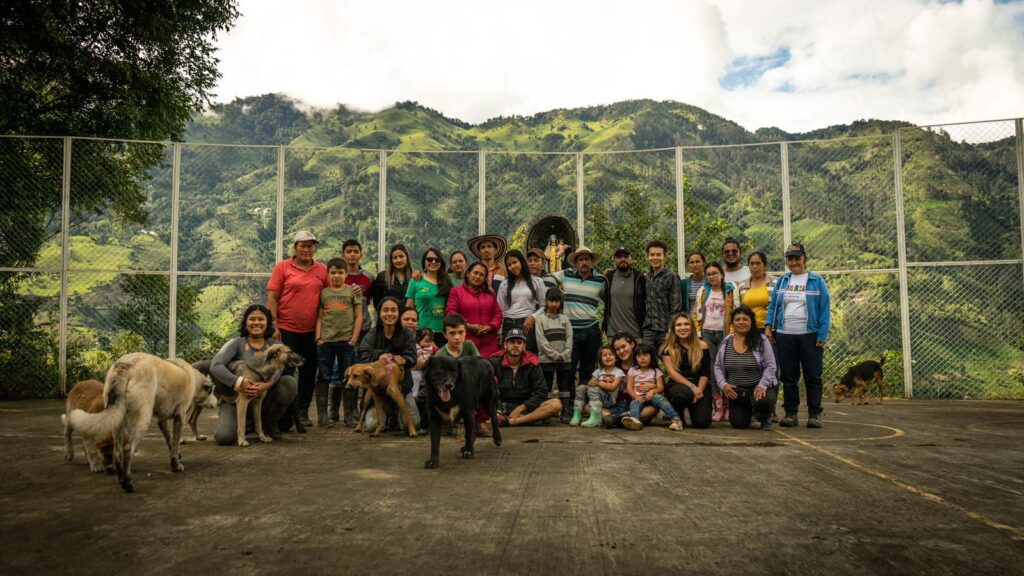
With the Escuela Campesina promoted by Siembra, whose purpose is the organizational strengthening of peasant leaders, the territorial defense of Cajamarca advances.
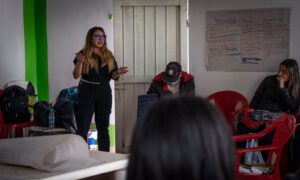
This space, formulated as an opportunity to analyze the socio-environmental conflicts of the territory and the needs of the peasant communities, based on the experience and knowledge of those who participate, took place in different villages of the municipality throughout 2022.
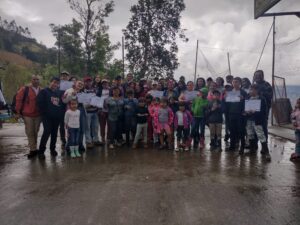
The four days of joint work involved farmers of different ages in the exchange of knowledge and the strengthening of their tools to protect the territory.
Dual carriageway
The first meeting was held on May 21 in the village of Las Hormas in the municipality of Cajamarca. The central topic of the session was the “Paso Urbano Cajamarca” dual carriageway project, which is part of the fourth generation (4G) road project, and which has been under development for a few years in the country.
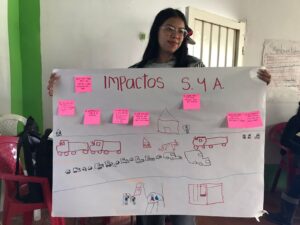
The stages, chronology and current status of the project were presented. In addition, a collective exercise was carried out to identify the environmental, social, and economic impacts, and the possible legal routes that could be implemented to protect the rights of the Cajamarcuna population were analyzed.
Mining Overview
On June 25, with the purpose of generating a space for discussion on the most relevant litigations related to the popular consultation and the legal strategies undertaken against the mining titles in force in Cajamarca, the second moment of the school took place in the Altamira village of this municipality.
During the session, the different active litigations related to the La Colosa mining project, the emblematic popular consultation for saying NO to mining and the revocation of water concession permits for that project were explained. In addition, the status of the subtractions from the Central Forest Reserve (RFC) which are in force but suspended in the municipality of Cajamarca, was explained. Afterwards, a conversation was held with the attendees and a presentation was given on the legal framework for subtractions from forest reserves.
The details of the new regulations that affect the subtraction processes at the national level and their potential effect on the RFC of Cajamarca were also presented. At the same time, some courses of action that citizens can exercise to avoid arbitrariness in the processes of abductions were proposed.
Moors
On August 27th, in the El Espejo village, the third session of the school took place, with the aim of highlighting the importance of páramo ecosystems in Cajamarca and identifying possible legal mechanisms for their defense.
In addition to giving a presentation on the importance of páramos, the nullity and restoration of rights litigation promoted by AngloGold Ashanti against the delimitation of the Los Nevados páramo was explained. This litigation aimed to exclude certain areas and obtain direct compensation for the alleged special damage caused to this company.
It is clarified that the mining titles of the AGA represent a threat to the moorland ecosystems and water sources, which generates a socio-environmental conflict that affects the rights of the population of Cajamarca, especially the peasant population. The absence of participation, the overlapping of mining titles with strategic ecosystems, and the impact on water resources due to exploration work have been evidenced.
Hass Avocado
The last session of the Escuela Campesina took place on September 24 in the village of La Tigrera. This session was aimed at analyzing the socio-environmental problems arising from the Hass avocado monoculture and determining a possible route of political and legal action to stop the advance of this monoculture in the municipality or region.
To understand the issue, a debate was opened about the right to food and food sovereignty, the scope of the United Nations Declaration on the Rights of Peasants, and how the monoculture of Hass avocados impacts our right to food.
A presentation was given on the impacts caused by the cultivation of Hass avocados in the municipality of Pijao, particularly highlighting the impacts on the wax palm and the actions being taken to halt the advancement of the cultivation in the municipality and the region.
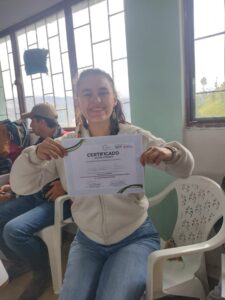
Those who participated in this process expressed the importance of the space. Flor Alba Castellanos indicated that the Peasant School is important because “it allows us to learn about the mechanisms of citizen participation to be able to defend our territory”. Similarly, Ever Olivera, said that the school allows “to update us in the struggle for territorial defense and build a roadmap to continue it”.
The Escuela Campesina will continue in 2023 with the strengthening of the organizational processes that Siembra accompanies in Cajamarca, while promoting the exchange of experiences and knowledge of the peasant population on projects and issues that affect their territories.



 Contact Us
