


27/03/2023
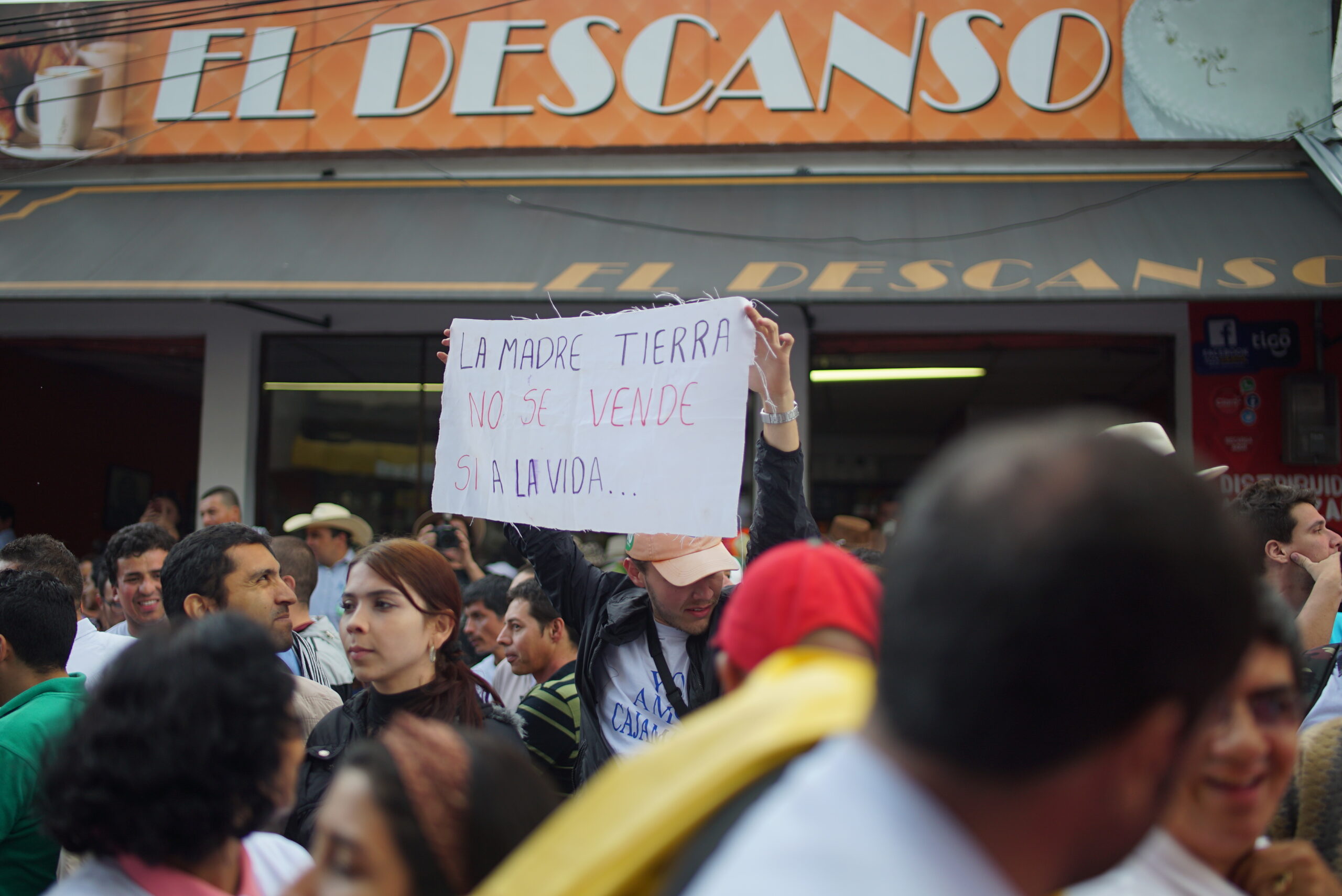
Six years ago, in March 2017, the population of Cajamarca, Tolima, in Colombia, spoke out in a historic popular consultation on the prohibition of mining in their territory. The result was resounding: 98% of voters opposed mining in the area, stopping the realization of the La Colosa project, which would be one of the largest open-pit gold mines in the world, promoted by the multinational AngloGold Ashanti.
This victory was the result of a long struggle by the community and social organizations in defense of water, the environment and life. Cajamarca is a region of great water importance and biodiversity, and its inhabitants feared that mining exploitation could irreversibly damage water sources, the ecosystem, the agricultural vocation of the territory and their way of life.
The referendum was not an easy task. The communities had to comply with different legal requirements and face great pressure from mining companies and the government, which saw in the region an opportunity for gold exploitation. However, the community persevered and managed to carry out the first popular consultation of citizen initiative, which became an example to follow for other regions of the country and the world.
Since then, Cajamarca has become a benchmark for the defense of the environment and human rights in Colombia and Latin America, and popular consultation has become a mechanism of participation so that communities have a voice and vote in decisions that affect their territories and their lives.
The authorities and AngloGold Ashanti turn their backs
Although the result of the referendum has not been respected by the mining company or the government, the community continues to fight and organize to demand respect and guarantee of the decision that was taken.
For Mariluz Rincón, a citizen of Cajamarca and member of the Cajamarca-Cosajuca Youth Collective, “these 6 years have been a struggle to get the popular consultation validated and implemented. There are currently four judicial processes that seek to affect the results and their implementation. For example, AngloGold Ashanti filed a lawsuit requesting the nullification of the decisions of the environmental authority, Cortolima, that terminate the water concessions for the La Colosa mining project and sued the administrative act that delimits the Los Nevados Páramos Complex issued by the Ministry of Environment, because it affects the development of the mentioned project. In addition, he denounced that the mining multinational is responsible for stigmatization, judicial processes, and persecution of some leaders in the region.
In conclusion, the six years of the popular consultation in Cajamarca have been a milestone to stop the advance of extractivism in strategic areas for life. The perseverance and organization of the community has shown that it is possible to resist pressure from mining companies and the government, and that it is possible to build a just future for all people.



 Contact Us
